

If you’re considering making your own dog food, it’s worth looking carefully at both homemade and commercial options. Neither canned food nor homemade food is automatically right for every dog—the most important considerations are nutritional completeness, food safety, your dog’s individual needs, and what you can prepare consistently.
When we first adopted our Miniature Pinscher, Minnie, her coat looked dull and she had an area of dry, irritated-looking skin beneath her chin and on her chest. She was eating canned dog food at the time, but that does not prove that her food caused the skin problem. Dry or itchy skin can have many possible causes and should be discussed with a veterinarian, especially when it persists or worsens.

Compare the Real Costs
Cost matters, but the price of a can or batch does not tell you whether a diet is nutritionally appropriate.
When comparing canned and homemade dog food, consider the cost of ingredients, required supplements, preparation time, storage, and the amount your dog needs. For commercial food, check the label for a nutritional-adequacy statement appropriate for your dog’s life stage rather than choosing on price alone.
Diet alone cannot guarantee fewer veterinary visits, so any health concerns should be discussed with your veterinarian.
Greater Control Over the Ingredients
Preparing dog food at home allows you to choose and measure the ingredients in each batch. This can be appealing when you want to know exactly what you are placing in your dog’s bowl.
However, recognizable ingredients alone do not make a diet complete and balanced. A homemade recipe must provide all the nutrients your dog needs in appropriate amounts and proportions.
Introduce dietary changes gradually when appropriate, and ask your veterinarian how best to transition your individual dog.
Vitamins and Minerals in Homemade Dog Food
Homemade dog food often requires carefully measured sources of vitamins and minerals to provide nutrients that the main ingredients alone may not supply.
The book explains which additions are used in the Chicken Chow recipe and where they can be purchased. Supplements should not be selected or measured by guesswork, because too little or too much of a nutrient may be harmful. Discuss the complete recipe with your veterinarian or a board-certified veterinary nutritionist before feeding it as your dog’s regular diet.

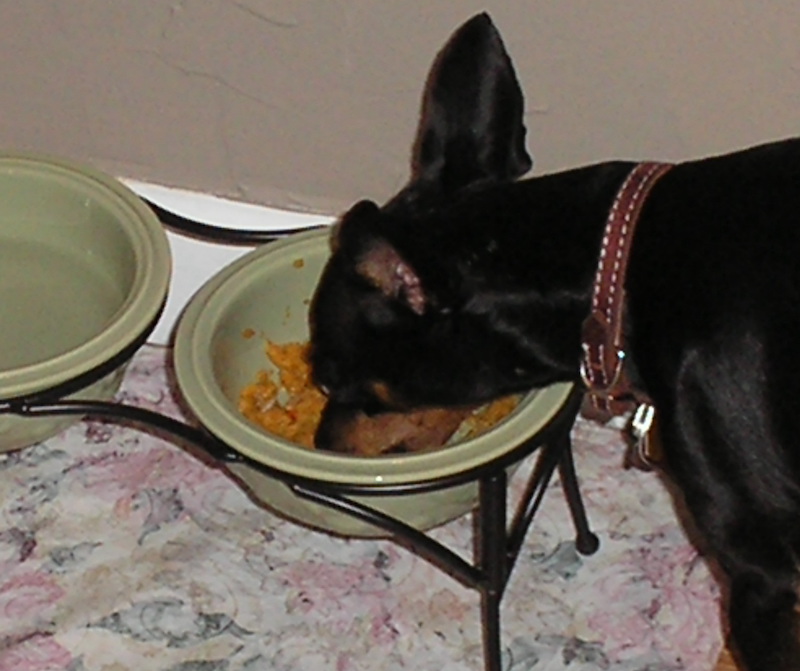
The photograph above shows Minnie looking bright and happy. Although her coat appears shiny, a photograph cannot establish that a particular food or diet caused the change.
Learn How to Make Chicken Chow
If you would like to learn how to prepare Chicken Chow at home, Make Your Own Dog Food provides the ingredients, additions, and step-by-step instructions in one convenient guide.